Gallbladder Cancer Treatment
Overview
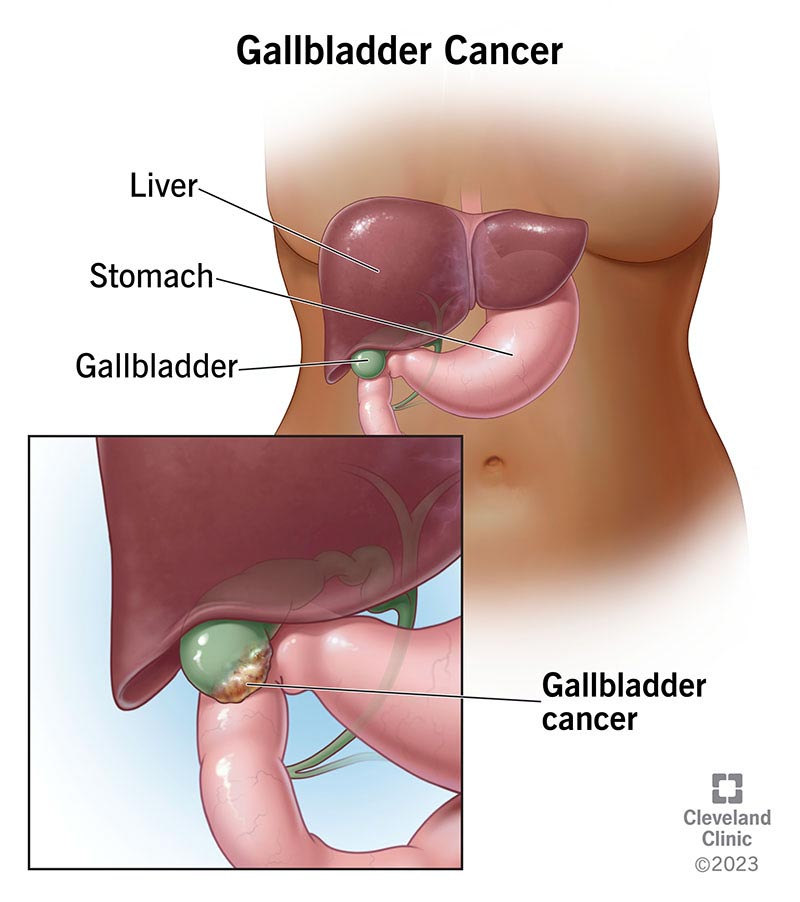
Gallbladder cancer occurs when malignant (cancer) cells grow in your gallbladder. Your gallbladder is a pear-shaped organ in the upper right of your abdomen, just under your liver. It stores and delivers bile, a fluid your liver secretes to help you digest fats in foods you eat.
Gallbladder cancer begins in the innermost layer of your gallbladder, called the mucosal layer, and spreads outward. It often doesn’t cause signs or symptoms in the early stages. Instead, healthcare providers often find the cancer by chance after gallbladder surgery.
The cure rate for gallbladder cancer is excellent if it’s in the early stages and healthcare providers can remove it with surgery. Unfortunately, most people don’t receive a diagnosis until the cancer has spread beyond their gallbladder. Gallbladder cancer is difficult to treat at this point.
Risk Factors
In the U.S., gallbladder cancer is more common among certain groups, including people who are:
- Women or assigned female at birth.
- American Indian, Alaskan native or Mexican-American.
- Over age 65. (The average age at diagnosis is 72.)
- Gallstones or a history of gallstones.
- Chronic (long-term) gallbladder inflammation (cholecystitis).
- Chronic Salmonella typhi infection (the bacteria that causes typhoid).
- A build-up of calcium deposits in your gallbladder (porcelain gallbladder).
Symptoms
Gallbladder cancer is difficult to detect because symptoms don’t show up in the early stages. When symptoms appear, they’re similar to more common conditions, like gallstones or a blockage in a bile duct.
- Upper abdominal pain.
- Yellowed skin and yellowed whites of your eyes (jaundice).
- Lumps in your abdomen.
- Nausea and vomiting
- Unexplained weight loss
- Heartburn and indigestion
- Bloating.
- Fever.
Looking For Best Gallbladder Cancer Surgeon in Jaipur?
Book Your Appointment with Dr. S.K. Saini
Best Gastrointestinal Surgeon in Jaipur, serving for more than 14 years as proctologist and bariatric surgeon in Jaipur.
Contact UsCauses
Gallbladder cancer occurs when healthy cells become malignant cells that grow and multiply out of control. This can happen when there are changes, or mutations, in the genetic material that tells healthy cells how to behave. With gallbladder cancer, these genetic mutations occur over time (acquired). You don’t inherit them from your biological parents.
Scientists don’t know what causes cells to become cancer cells in the first place. But they’ve identified several factors that may increase your risk.
Treatment
- A family history of stomach cancer or certain inherited gene mutations can increase your susceptibility to the disease..
- Patients with advanced disease should undergo chemotherapy treatment in order to allow reduction in symptoms. It increases the survival and downstage the tumor to facilitate surgical intervention
- Endoscopy is the main diagnostic tool for diagnosing gastric cancer. Endoscopic findings reveal presence of gastric ulcer with protruded margins and mass in the stomach.
- CECT abdomen indicated in cases of surgical resection
When to Consult Doctor Suresh Kumar Saini
Seek immediate care if you develop signs and symptoms of a serious stomach complication, such as:
- Abdominal pain so intense that you can't sit still or find a comfortable position
- Yellowing of your skin and the whites of your eyes (jaundice)
- High fever with chills
 Reviews