Appendix Surgery in Jaipur
Overview
The appendix is a small, tube-shaped pouch attached to the large intestine, specifically at the junction where the small intestine meets the large intestine. It is located in the lower right abdomen. Historically considered a vestigial organ with no essential function, recent research suggests that the appendix may play a role in the immune system, particularly in maintaining gut flora.
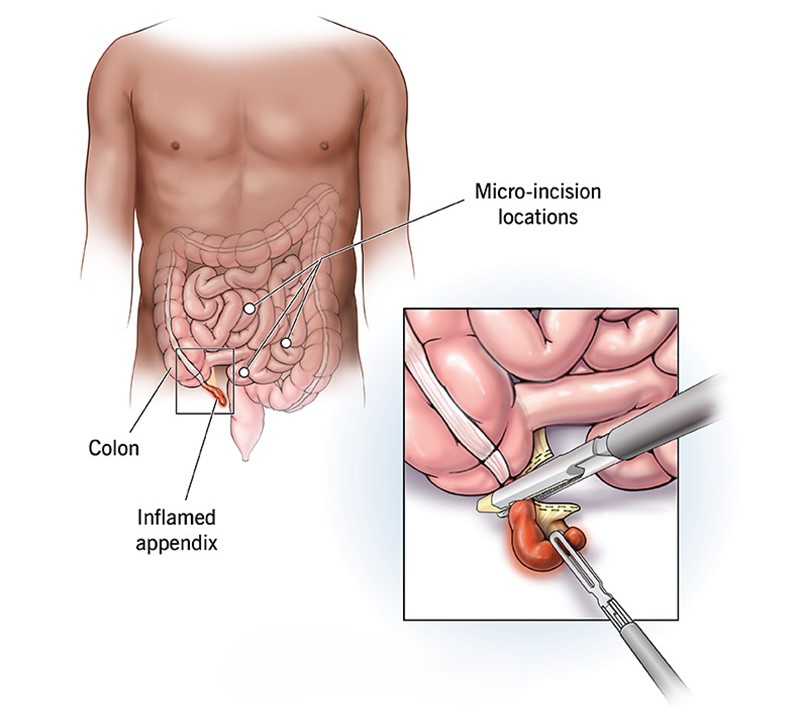
Appendectomy is a surgical procedure to remove the appendix, a small, tube-shaped pouch attached to the large intestine. It is typically performed to treat appendicitis, an inflammation of the appendix, which can become a medical emergency if the appendix bursts.
Symptoms of appendicitis include abdominal pain that starts near the navel and shifts to the lower right abdomen, nausea, vomiting, loss of appetite, fever, and abdominal swelling. Diagnosis involves a physical examination, blood tests to check for infection, and imaging tests such as ultrasound or CT scan. There are two main types of appendectomy: open and laparoscopic.
Symptoms of Appendicitis
Appendicitis is an inflammation of the appendix, a small tube-shaped pouch attached to the large intestine. If not treated promptly, the appendix can rupture, leading to serious complications.
- Abdominal pain (starting near the navel and later moving to the lower right abdomen)
- Nausea and vomiting
- Loss of appetite
- Fever
- Swelling in the abdomen
- Constipation or diarrhea
Risk Factors for Appendicitis
While the exact cause of appendicitis is not always clear, several risk factors can increase the likelihood of developing this condition.
- Appendicitis is most common in people between the ages of 10 and 30, though it can occur at any age.
- Males are slightly more likely to develop appendicitis than females.
- A family history of appendicitis may increase the risk, suggesting a possible genetic component.
- Infections such as gastroenteritis or respiratory infections can cause swelling of the lymphoid tissue in the appendix, leading to obstruction.
- Diets low in fiber may increase the risk of appendicitis. A low-fiber diet can lead to constipation and the formation of fecaliths, which can block the appendix.
- Some studies suggest a correlation between high sugar intake and an increased risk of appendicitis.
- People with limited access to healthcare may have a higher risk due to delayed diagnosis and treatment of gastrointestinal infections.
- Appendicitis appears to be more common in Western countries, possibly due to dietary and lifestyle factors.
While appendicitis can affect anyone, certain risk factors such as age, gender, family history, infections, dietary habits, and environmental influences can increase the likelihood of developing this condition. Recognizing these risk factors can help in early identification and timely treatment, reducing the risk of complications associated with appendicitis.
Looking For Appendicitis Surgeon in Jaipur?
Book Your Appointment with Dr. S.K. Saini
Best Gastrointestinal Surgeon in Jaipur, serving for more than 14 years as proctologist and bariatric surgeon in Jaipur.
Contact UsTreatment Options for Appendicitis
The primary treatment for appendicitis is surgical removal of the inflamed appendix, known as an appendectomy. This procedure is typically performed as soon as possible after diagnosis to prevent complications such as a ruptured appendix, which can lead to peritonitis, a serious infection of the abdominal cavity.
1. Appendectomy
- Procedure: Surgical removal of the appendix.
- Approaches: Appendectomy can be performed using two main
approaches:
- Open Appendectomy: A single, larger incision (5-10 cm) is made in the lower right abdomen to remove the appendix.
- Laparoscopic Appendectomy: Several small incisions (0.5-1.5 cm) are made, through which a laparoscope (a small camera) and surgical instruments are inserted to remove the appendix. This minimally invasive approach is associated with less postoperative pain and a quicker recovery compared to open surgery.
- Advantages: Appendectomy is highly effective in treating appendicitis and preventing complications. The choice between open and laparoscopic surgery depends on factors such as the severity of appendicitis, the surgeon's expertise, and patient preference.
2. Antibiotic Therapy
- Indications: In some cases of uncomplicated appendicitis, particularly if the diagnosis is made early and the patient's condition is stable, antibiotic therapy alone may be considered.
- Approach: Antibiotics are prescribed to reduce inflammation and fight infection. However, this approach is not suitable for all cases and may carry a risk of recurrence.
Complications and Risks
While appendectomy is generally safe and effective, potential complications and risks associated with the procedure include:
- Infection
- Bleeding
- Wound complications (e.g., dehiscence)
- Adverse reactions to anesthesia
- Rarely, damage to surrounding structures such as the intestines or blood vessels
When to Consult Doctor Suresh Kumar Saini
Consulting Dr. Suresh Kumar Saini for appendicitis or any related symptoms would be advisable if you experience any of the following:
- Persistent abdominal pain, especially if it starts near the navel and then moves to the lower right abdomen, can be a sign of appendicitis.
- Frequent episodes of nausea and vomiting, particularly if accompanied by other symptoms like abdominal pain and fever, should prompt medical evaluation.
- Significant loss of appetite, especially if it coincides with other symptoms of appendicitis, warrants medical attention.
- A fever, particularly if it is persistent or accompanied by other symptoms of appendicitis, may indicate an underlying infection requiring medical assessment.
- Swelling or bloating in the abdomen, especially if it is localized to the lower right side, can be a sign of appendicitis.
 Reviews